I marvel at Thea Darlow’s versatility. Her Trees series is compelling, the individual creations structurally similar — angular and proportionate, with clearly delineated focal points — but different either in tone or style. Apostles and Trees, for example, is impressionist, wispy, shadowy, capturing an early, misty winter morning; Blue Stone Pines, Lion’s Head is denser, harsh, with rigid segmentations, its bold colours representative of a blazing summer’s day. Intriguingly, these canvases all have a mysterious embellishment of squarish shapes, a nod, perhaps, to the magnificent geometry within the natural world.dapibus leo.
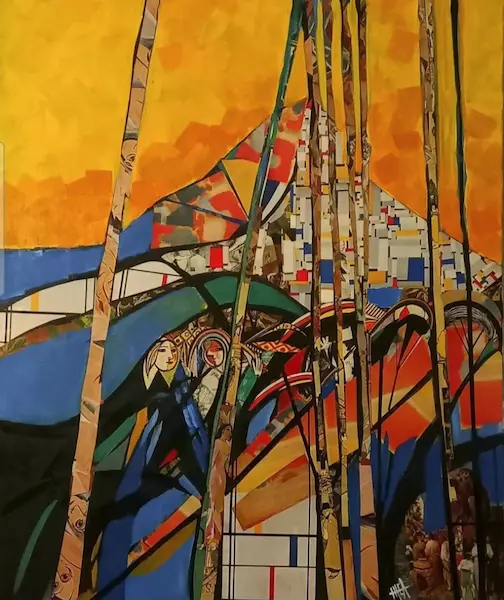
Babylon is a fascinating multimedia piece, incorporating cuttings from art reference books in a collage effect. In one corner, for instance, are fragments of a work by Francis Gruber, the great 20th century French painter lauded for his images of the poor and destitute in his unique Nouveau Réalisme style. Alongside is a cropping of an unmistakable Piet Mondrian abstract — straight lines, right angles and primary colours representing the purity of the Dutch “De Stijl” (The Style) movement of the same era.
And then there is Oncology, a breathtakingly honest self-portrait depicting Darlow’s battle against cancer. Within its complexity her fear is palpable; so, too, is a grim determination.
Cavendish Contemporary will hold Darlow’s first solo exhibit in early-2025.